
The problem
Lack of finance is an automatic death sentence to refugee businesses
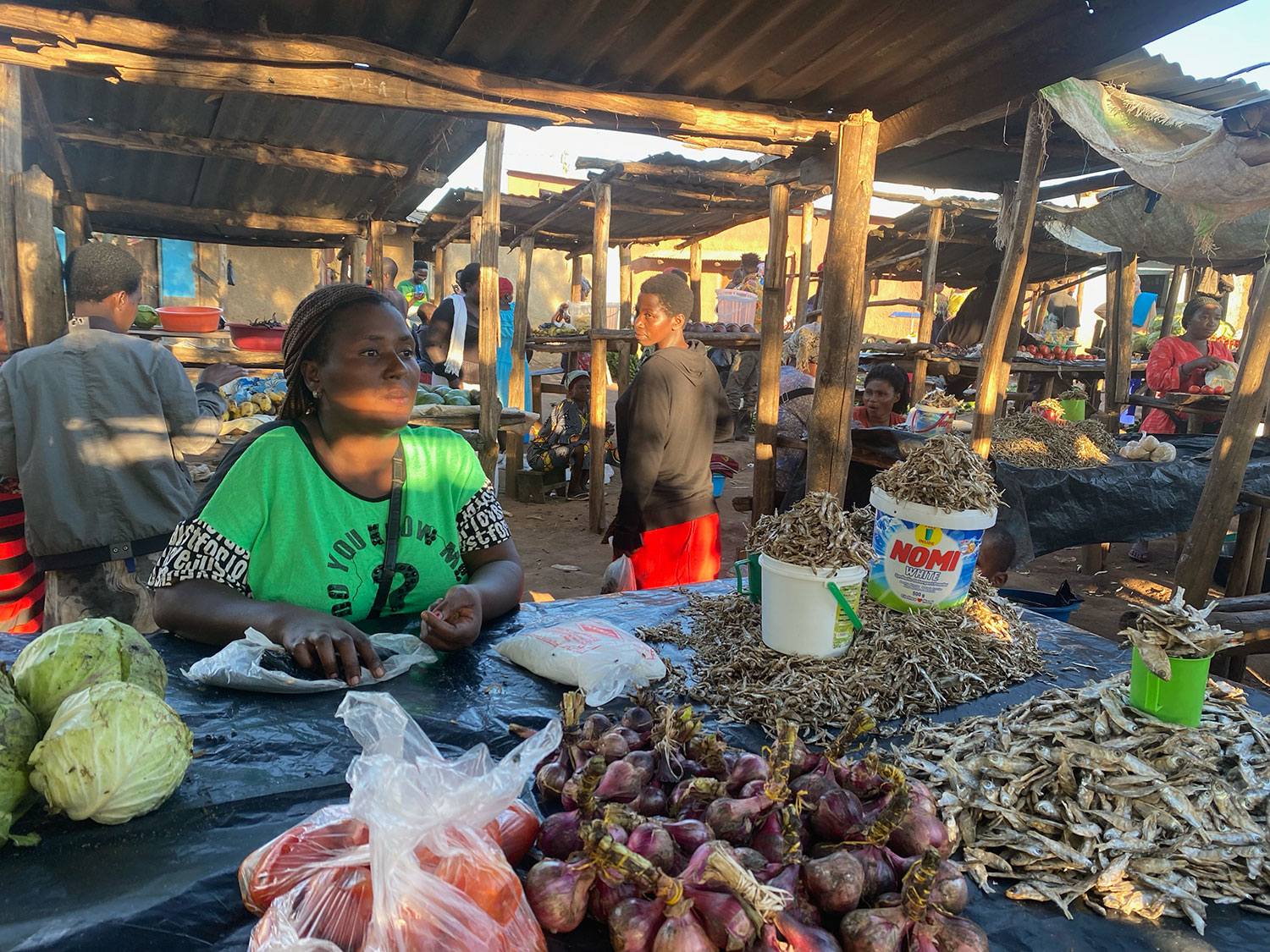
Refugee business financing is a rights issue and access dilemma.
Decades of refugee response in Uganda have seen billions of dollars spent with little improvement in refugee self-reliance.
Uganda’s self-reliance model is widely praised, but lack of land for cultivation and an ever-increasing refugee population from fragile neighboring countries mean that over 99% of refugees still require some form of humanitarian support to meet the basics of life. Unfortunately, the humanitarian support is currently decreasing. For instance, the old refugee category in Uganda receives USD 3.25, and new arrivals receive USD 8.65 to cater for monthly all-round expenses. This is hardly enough to take someone through even a week.
In responses to these needs for survival, refugee women and entrepreneurs resort to running businesses. However, they cannot access business financing and funding. This is because being a refugee comes with a status that is deemed too risky by financial and banking institutions to deal with. Additionally, though Uganda’s refugee model is worthy of praise, it doesn’t allow legal ownership of land and property. Property and land ownership are essential requirements for those seeking business financing from traditional financial and banking institutions in Uganda.
As a result, most refugee businesses resort to Village Savings and Loan Associations (VSLAs) and money lenders, who are currently charging an interest rate of 120% per annum. This becomes an automatic death sentence for most refugee women-owned businesses and refugee-run SMEs.
So this is the issue.
According to UN Women, only about 20% of women in Sub-Saharan Africa have access to formal financial services such as business loans because of limited collateral security, lack of financial literacy, and restrictive cultural norms. Most women borrow from VSLAs and informal money lenders, which often come with higher interest rates compared to traditional business loans. UN Women also highlights that less than 10% of women-owned businesses have access to venture capital or investment funding, which severely limits their potential for growth.
The UNHCR says that it is harder for refugee-owned businesses to get loans because they can’t provide collateral, there are legal barriers, and there isn’t a lot of financial infrastructure in Ugandan refugee-hosting areas. Less than 5% of refugee entrepreneurs can get formal business loans. Thus, they often rely on informal lending networks with exhortative, exploitative, and unsustainable rates.
One of the most significant systematic barriers to scaling and sustaining refugee businesses remains the financing of refugee women and refugee SMEs.
Amidst local and global calls for refugee self-reliance, more often than not, no one is talking about access to finance and funding for refugee women-owned businesses and refugee SMEs. But this needn’t be the case. Self-reliance comes with access to jobs and meaningful employment. Aspects that cannot happen unless there is sustainable creation of business to produce and supply goods and services within displacement settings
Market-based approaches are threatened.

refugee businesses shouldn’t have to take a business loan with an interest rate as high as 120% per annum
We are moving from a humanitarian approach to a development approach when responding to refugee needs. The development approach depends on markets but we all know that market-based approaches in refugee settings cannot function without tailored financial markets to support them. Refugee settlements in Uganda are vibrant economic centres with urban-like living arrangements where there is constant demand for goods and services by refugees, host communities, and humanitarians responding to the refugee needs
One valid question that needs an answer is: How do we build local refugee economies to produce goods and services and supply them locally? Currently, refugees and humanitarians import most essential goods and services from outside.
However, we must understand that the successful implementation of market-based approaches requires the intentional development of financial markets that offer tailored financial services and business financial literacy, thereby enabling the success of refugee-led businesses.
What we see today is exploitative informal financial markets that are burying refugee businesses and killing refugee self-reliance efforts. Extortionate interest rates can lead to the demise of borrowers’ business endeavors.
Market-based approaches thrive on demand-driven solutions, private sector engagement, sustainability, and scalability of local businesses and entrepreneurial initiatives in refugee settings. However, the enabler is access to finance and funding for local refugee business initiatives. This is currently missing.
However, this shouldn’t be the case. Refugee women business owners and SMEs shouldn’t have to wonder if, how, and from whom they will access finance and funding. And refugee businesses shouldn’t have to take a business loan with an interest rate as high as 120% per annum because they have nowhere to run to. This is the system we have, but we all know it’s changeable and we can do better.
From Nakivale to Bidi Bidi, refugee businesses face this financing dilemma. Will we commit to changing this unfortunate occurrence? Or will we continue to run business as usual?
REBU is currently working in Kyaka II, Nakivale, and Kiryandongo Refugee Settlements in Uganda to enable refugee businesses to access affordable, reliable, flexible, and sustainable business financing and funding for refugees and members from the hosting communities.
Let’s look at the gender aspect of business financing.
REBU’s work for women to access business financing and funding is an act of justice and promoting resilience.
This is a gender inequality and equity moral concern
According to the UN Women 2024 Gender Snapshot Report, it will take 137 years to eliminate poverty among all women and girls if we don’t act now.
All over refugee settlements in Uganda, women take the instrumental role of ensuring their households have food on the table. Finding and cooking family meals is women’s job.
To find food, most of them wake up and start small businesses. In the past, when land was abundant, they were responsible for cultivating it; however, in the current situation, where land is scarce, business appears to be the only viable option to support their families.
Thus, refugee women’s support does not stop at the women themselves but the entire households where these women come from.
REBU’s efforts to provide women with access to business financing and funding are an act of justice, promoting fairness to resilient women who refuse to be defined by displacement conditions, instead choosing to use their knowledge and skills to promote self-reliance.
During famine, women who are at the centre of searching for the food and preparing it always sacrifice their portions to feed the rest of family members. This is not only a gender issue but also a cultural issue. Hence, financing refugee women-led businesses is promoting food security and nutrition for the women themselves.
Our research on Village Savings & Loans Associations (VSLAs) in Refugee Settlements in Uganda indicates that refugee women are likely to pay their loans more than refugee men. This is because refugee men borrow for consumption, while women borrow for production and business operations. Hence, financing refugee women is more secure for impact investors and funders in comparison to refugee men.
On average, a refugee family with a running business has better prospects in all the education, food security, and health indicators.
Financing refugee businesses offers better value for money

Funds channeled through Refugee Led Initiatives are two or three times likely to produce better outcomes.
UNHCR estimates that Uganda spends between USD 800 million and USD 1 billion annually on refugee response. For years, this funding has focused on supporting consumption and distribution of handouts on top of essential services like health and education.
Financing and funding the production of goods and services by refugees is another way to channel resources from distributing handouts to supporting the urgency and self-reliance of refugees themselves and hosting communities.
Supporting refugee SMEs to expand and create jobs equals supporting refugee youth employment and livelihoods.
Refugee business financing is supporting the refugee inclusivity agenda. Scholars have argued that channeling funds through refugee-led initiatives is two or three times more likely to produce better outcomes than using other channels.
It’s difficult to imagine a more effective approach to promoting refugee inclusivity and self-reliance, while also providing better value for money, than empowering refugee businesses with access to finance and funding. This is the real self-reliance we are talking about.
Testing untested waters: Working with refugees to build SMEs
As refugee job creation is a very big goal at REBU, it makes sense for us to look at the refugee business financing and funding in lenses of impact beyond the founder.
Most refugee businesses tend to be small and have no significant impact beyond the founder. We can refer to them as sole proprietorships in business terms.
The smallness of refugee businesses limits their ability to create sustainable jobs and makes them susceptible to collapse at any time they face challenges. For example, the challenge may be the sickness of the proprietor or an accident or sickness of a family member.
However, this shouldn’t be the case because with better planning, risk-taking, and outward business thinking in refugee settings, jobs can be created through uplifting small businesses and SMEs.
Intentional investments of USD 100,000–200,000 can generate lasting jobs ranging from 20–50. Keep in mind that the traditional model of handouts is squandering millions of dollars without producing any jobs.